
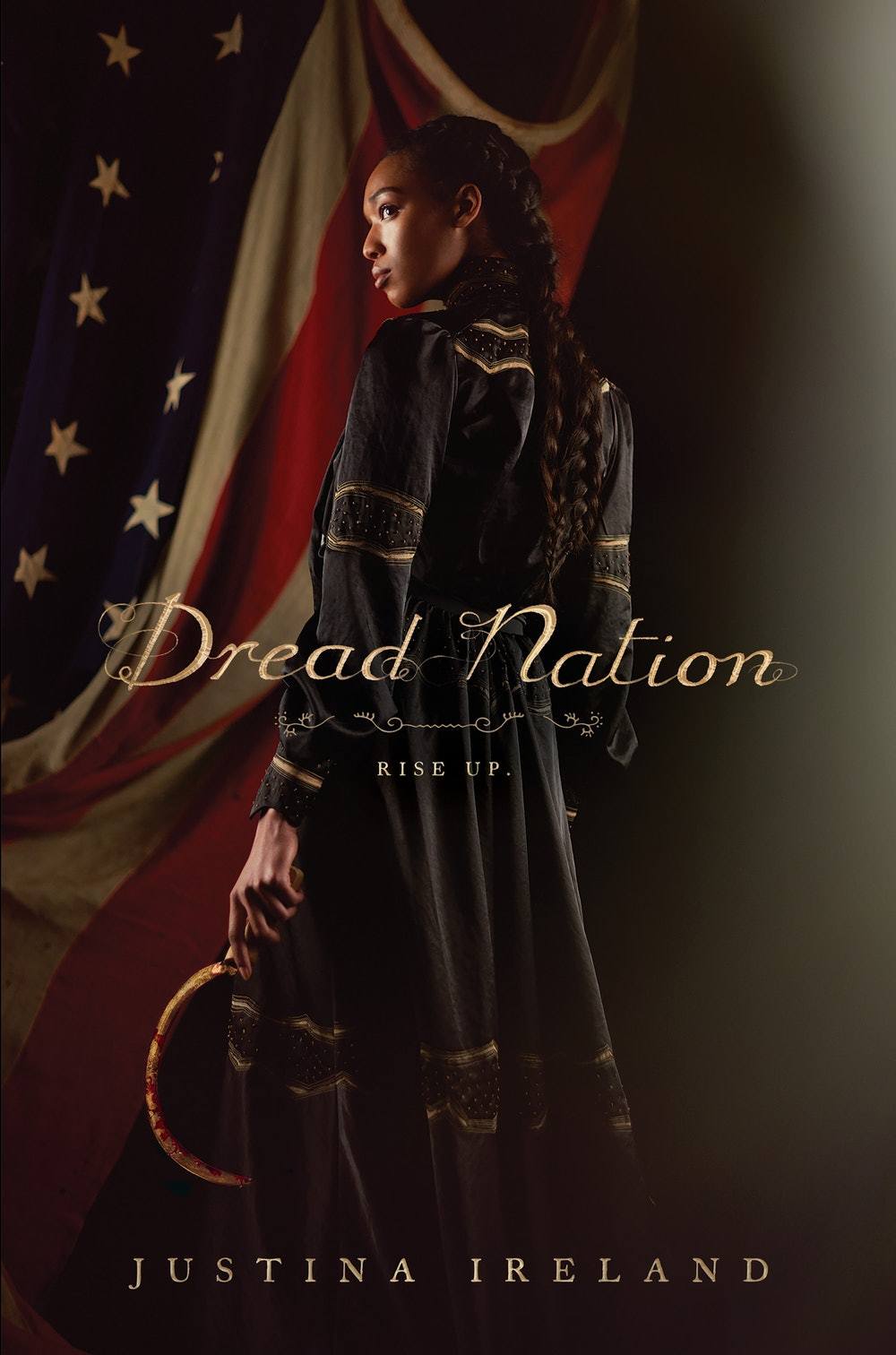
Dread Nation, a book review

Imagine if you will, a world in which the Battle of Gettysburg wasn’t just the end of the American Civil War. But that it was also the start of a zombie apocalypse. We’ve now entered the world of Dread Nation.
Written by Justine Ireland and published in 2018, Dread Nation is an alternate-history horror novel that considers what our nation might have looked like if zombies had risen at the actual battle of Gettysburg. What results is a dark, twisted, entertaining novel that is truer to reality than it should be.
Our main character is Jane McKeene, the black daughter of a plantation owner’s wife. She has a fairly comfortable childhood, being raised by her mother and the other women on the plantation as an adored and willful child.
Outside of her family’s plantation, horrors abound. There is the grotesque living dead, of course. But there is also raging racism that leads the leaders of America to do horrifying, monstrous things. Things like taking black and Indigenous children from their families and placing them into schools designed to train them to fight the living dead.
I feel like it would be irresponsible to note here that schools intended to indoctrinate Indigenous children were a very real thing. Children were taken from their families and forced to assimilate into a WASP way of life. They were taught to be servants and told to be grateful for the opportunity. That’s scary enough without zombies, frankly.
By the time Jane is old enough to be taken, there is hope that the zombies are under control. Cities, like Baltimore, are up and running. The well-to-do attend theater and lectures and even bask in electric light.
Under control, of course, is a fragile concept.
Jane is sent to Miss Preston’s School of Combat. The girls there are told they’re being trained to be Attendants. Their life will be one of servitude, to stand near wealthy white women and protect them in case of a zombie attack. Jane seems like she’s going to have a decent future. She’s good at her lessons, and good at killing the dead. She’s less good at following the rules. She gets in trouble for sneaking out at night, getting newspapers, and not minding her etiquette lessons.
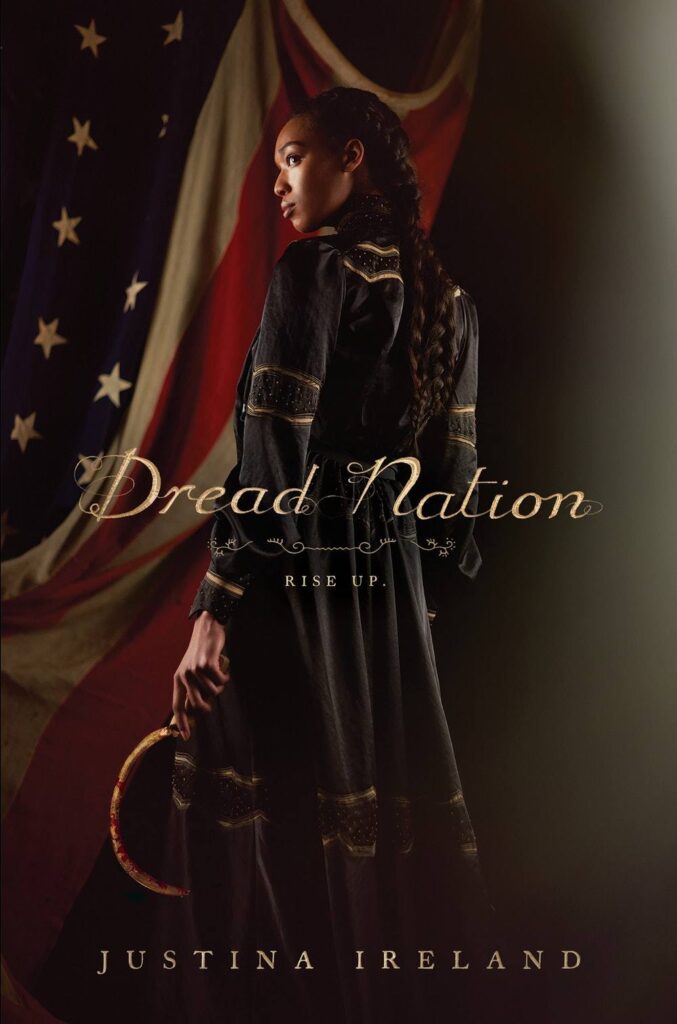
Worse, she’s often compared unfavorably to Katherine, a classmate who cannot do wrong. She’s an elegant young woman, but perhaps too pretty for her good. She’s refused several Attendant jobs because women find her too pretty to be around their husbands.
When Jane discovers a secret about Baltimore that the mayor would rather no one else know, she and Katherine are thrown on a train and sent to a frontier town far out west, called Summerland. Summerland is run by a racist preacher and his hateful son, who happens to be the sheriff. Jane has to get herself and Katherine out of the town before they’re both killed, either by the living dead or the racist leaders.
This novel was a delightful blend of zombie story and alternate history. And it manages to do justice to both genres.
On the historical side, there are all sorts of delightful details that are just a little wrong. Just a little different than our Civil War buffs will remember. It feels like this world is just a step away from ours, as if we were to trip in our world we might fall right into this one.
It’s the zombie story part though, that of course had my attention. And it should surprise no one that this part was fantastic. The dead are always creeping nearby, always a threat. The simplest actions have to be adjusted because the dead are always there.
What makes a zombie story good, though, is how the living responds to the threat. Who becomes a hero, and who becomes a monster? This is the real attraction to a zombie story. And it’s deeply and richly explored in Dread Nation.
This is the sort of book that is perfectly written, and by the only person who could have done it. Justina Ireland is from Pennsylvania, like me. You don’t grow up in Pennsylvania without understanding Gettysburg. The blood from that battle sunk into the land we were raised on. It’s in our very essence. And of course, Pittsburgh is the home of zombie stories. Ireland picks up the traditions of Romero and does the old man very proud.
Dread Nation is exciting and infuriating. It has enough twists to keep you guessing and just a little touch of magic. It’s honestly the best book I’ve read so far this year.
I will tell you that the story ends on a bit of a cliffhanger. Fortunately, the sequel, Deathless Divide, is already out. So if you’re going to read Dread Nation, which I highly suggest, make sure you have the second one close at hand.








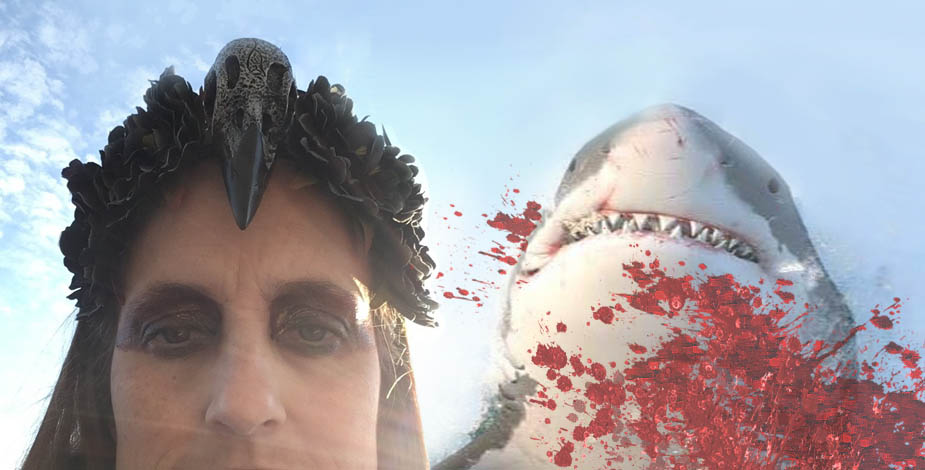
Released in May of this year, You Like It Darker is the latest short story collection by Stephen King.
In the afterward King says. “You like it darker? Fine, so do I.” This sort of declaration might lead one to believe that this collection is going to be darker than his others. That we might reach depths of horror that we haven’t yet seen before, even from the King himself. This is a promise that this book does not deliver on. But that isn’t to say that You Like It Darker wasn’t still a damn fine read.
The good stories
The first story in the book, Two Talented Bastids, started everything out on the right foot. This is the story of a man named Mark. Mark looks after his father, who he lovingly calls Pop. Pop is a famous author His best friend, Butch, was a famous painter before he passed.
Everyone wants to know how two men who are lifelong friends suddenly become famous in their forties. But as far as the men in question are concerned, they’re just two talented bastids. That is, until Pop dies, and leaves a story to explain to Mark how one fateful hunting trip changed their whole lives.
Another tale I appreciated was Rattlesnakes. This is a sequel to the classic King novel, Cujo. If you haven’t read Cujo, this will spoil the ending for you. I, for instance, had not read Cujo.
Rattlesnakes is about Vic Trenton. A recent widower, he’s traveled to Florida to heal from his losses. There, he meets a lovely woman about his age (old) who appears to be not quite right in the head. She walks around around town like Delta Dawn, not with a suitcase in her hand but wheeling a twin stroller. Years ago, her twin sons were killed by rattlesnakes. And she’s never really gotten over that. So she wheels around the stroller and pretends they’re still in there. At least, everyone assumes she’s pretending.
Easily my favorite story in the book was Danny Coughlin’s Bad Dream. Imagine if you had a prophetic dream, but just one. That’s exactly what happens to Danny. He dreams of the location of a murder victim. When he goes to the location, which he’s never been to before, he finds the poor woman in question. Of course, the police find this extremely suspicious. And one detective grows so suspicious that he starts taking matters into his own hands.
The bad stories
Of course, not all the stories can be great. One that I especially disliked was Finn. This is the story of a young man with bad luck. I mean, terminally bad luck. So bad that he’s kidnapped in a case of mistaken identity.
This story just didn’t have a satisfying ending. Nor did it have a satisfying middle. There was just no real conclusion.
Another story that missed the mark was On Slide Inn Road. It’s the story of a family on a car trip to see a dying sister when they’re overtaken by some rough people outside of an old abandoned inn. This story also doesn’t seem to have any sort of cohesive storyline. It’s just the story of a family having a really bad day. It doesn’t go anywhere.
Overall, this was a collection that shows King’s patterns. He writes over and over about men who have lost their wives and their sons. Men who have survived their families and been left alone. Most of the main characters in these stories fall into that category. Perhaps in that way, these stories are darker than the ones King has written in the past. At least for him.
Fans of King’s work will love this book. I loved this book. I loved catching up with the lonely widower from Cujo. I loved meeting monsters who might or might not have crawled out of the back of a Buick. And while none of these stories were dark enough to disturb my sleep, they were good enough to keep me up reading late.
 (4.5 / 5)

As summer approaches, there’s nothing quite like reading a book with warm campy vibes. It’s especially true if you’re lying on a sunny beach. Nicole M Wolverton’s A Misfortune of Lake Monsters matches that picture perfectly. It’s described as a creature feature with a Stranger Things-esque friend group.
Although set in modern times, I found the story felt like something out of the 80s (in a good way). Character dynamics reminded me of The Goonies and IT while the narrative combined just the right amount of adventure, romance, and horror to bring out nostalgia and comfort at the same time. Anyway, let’s dive (hehe) in!
Plot
Lemon Ziegler has one aspiration in life – to become a vet. Unfortunately, that would involve leaving her hometown, which is a problem as she is obligated to continue the family business. While such a situation is not out of the ordinary, the business itself definitely is. Lemon must impersonate Old Lucy, the town monster (a nice homage to the Loch Ness myth).
The decades-old legend about this creature swimming around in the lake is keeping tourism in the town alive. Because of this, poor Lemon has no other choice but to follow in her family’s footsteps. She keeps this secret from everyone, including her best friends, Derrin and Troy. The latter is harbouring feelings for Lemon that are stronger than friendship. As he is a teenage boy though, he is too afraid to make a move (much to Darrin’s enjoyment).
Things take an unexpected turn when a real monster shows up, hungry for blood. As one could guess in these kinds of stories, no one believes Lemon at first. This only allows the creature to claim more victims (and yes, I feel the saddest about the poor dog). Once the adults finally decide to do something, it alerts the FBI, which makes the situation more difficult for our gang. Unsurprisingly, they are the only ones who can stop the monster from wreaking move havoc.
In the midst of the riveting adventure, we also see Lemon go through a character arc. She stands up to her grandfather, allowing him to see her as an adult for the first time ever. There’s also the blossoming of her and Troy’s romance. The pair awkwardly navigate the transition from friendship to romance in an adorable way. At its heart though, this novel is about family, blood or otherwise, and how strong connections can sometimes be the only way to save your life. After all, who could defeat a multidimensional monster by themselves?
Overall thoughts
I had a blast with A Misfortune of Lake Monsters as it combined all the components of making an effective adventure story with enough heart to make you care about what happened to the characters. They are sympathetic yet entertaining and their relationships feel organic down to the dialogue that, while a tad cheesy, is oozing with charisma.
The reasons I am giving it four stars are more individualistic. I tend to go for a darker type of thriller/horror and this story, although not short of gore, ultimately steers in a more heartwarming direction. It’s something I anticipated knowing the age range and found fitting with what the narrative was going for.
I also would have liked a slightly different as I feel the story entered more of a sci-fi subgenre in the last third. While that’s fine overall, it is not my first choice of horror. Considering these things are more down to my personal preferences as a reader, I would absolutely recommend this book. I’m excited to see what the authors does next!
 (4 / 5)
Dear readers, the time has come for some answers. At least, that’s what the teaser for the new installment of Monastery says. As usual, it delivers what it promised and more as we untangle the past and its connection to the present. Without any further ado, let’s talk about it, shall we?
Plot
We start the episode with a blast from the past. Cassandra and Celeste (Nicole’s aunt and Arthur’s lover for those with short-term memory) are in the hospital because of Celeste’s pregnancy complications. Cassandra promises her former best friend that she will ruin her all the while we find out Francis’s real parentage. The picture is finally starting to come together.
As we are back in the present day, our group is more scattered than ever. Thomas is his father Walt’s prisoner while David is still running around looking for Rocky. Fred on the other hand is just looking for any place to crash, homelessness and all. Our dethroned beauty queen Nicole is hiding away from everything – including her shame. Last but not least, little Henry is spending his time taking care of Nana Beth. Guessing that is his redemption for trashing all the evidence of Albert’s murder gathered so far. Although frustrating, his actions are understandable – the poor kid is traumatized and just wants some peace.
George Turner’s murder is still an active investigation. It is obvious that this cover-up wasn’t nearly as successful as Albert’s. I sure as hell hope that Francis gets his comeuppance sooner rather than later. Not particularly because Turner didn’t deserve it but so the rest of the characters would be safe from him. Although as I’ve said before, his clear descent into sociopathic tendencies is kind of fascinating to watch.
We also get an interesting development in what so far has been a tiny background detail, which is the Monastery Werewolf. As the creature comes to visit Rocky, we find out our resident star dog considers it family. Not going to lie, it took me a few reads to understand what this means. Now I’m getting all sorts of ideas as to how the supernatural ties into the rest of the story.
Speaking of the supernatural, it is none other than Madame Witch who frees Thomas from his captivity. Well, her contribution is indirect as she sends his best friend Alfie to help instead. Although I’d say currently the two should set their dynamic status to ‘it’s complicated’. As soon as he’s free, Thomas is immediately back in his detective mode. For arguably the first time he gets some real answers as we find out the whole backstory of Albert/Celeste/Cassandra triangle. I won’t go into details as that trio deserve their own article but let’s just say it gives Cassandra a big ass motive for killing her husband. Not to mention the way she took Francis from Celeste was quite brutal to read.
We reach the lead-on for the grand finale as David and Henry are coming to free Rocky. This naturally comes with a condition – they must hand Francis the key they found during the investigation. Little do they know Nicole is already there being held at gunpoint. Oh, and Fred should also be around somewhere as he was sleeping there the night before. Thomas might be a little late to the party since he and Alfie are held a knifepoint by Rick (seems like a running theme here). Nothing good can come from this.
Overall thoughts
This episode does a perfect job of setting up the big finale. It reveals everything we need to know except the main question – who killed Albert? At this point, while it of course still matters, this story is so much more than that. It’s about all the mess that this family has got themselves into, how with each mistake they kept digging deeper, and how it took a whole new generation for all of that to come up to the surface. I can only hope our investigative gang will make it out alive…
 (5 / 5)
More thoughts from the author:
1. Although a minor character in comparison, Walt strikes me as someone who’s there to represent the themes of Monastery – someone who will do horrible things in the name of family. What was your intention with his characterisation, especially considering he works for justice (aka the police?)
This is why I will always defend my decision to have a large cast, as opposed to most books – when you get even the slightest sense of fleshing out a minor character, it feels so rewarding. Walt, to me, takes the crown of “father of the year”, even if he does it by locking his son up in the bedroom. He is protecting his wife’s secret, protecting his son’s innocence, and doing so by going against his core ideals – i.e., a detective covering up a murder. He’s also based on a favourite uncle of mine, so it makes me happy to give him his moment to shine.
2. Something I thought of while writing this review – the cover up of George Turner’s murder seems to be a kind of juxtaposition as to how neatly Albert’s was since the police keep discovering evidence left and right (and how Francis doesn’t particularly seem to care). Was this intentional on your part?
It all adds up to plot convenience, and I have no shame in admitting that – Albert’s murder was so neatly covered up because I needed it to go unsolved for 14 years, whereas the reader knows who killed George, so there is no need for the cover-up to be well done.
As for Francis’ reaction to the murder, he started out anxious and paranoid after the fact, but he has grown into a state of not caring, which further depicts his descent into darkness – he knows he’s close to his goal (of finding the money and leaving his family), so there is a sense of invincibility taking over. He is stepping into his main villain energy and we are here for it!
3. Alfie has been yet another background character until now and yet he is the one who rescues Thomas. To me he seems like the friend who genuinely cares for Thomas and who gives him that reality check he sometimes needs to get out of his own head. Was that at least partially why you chose to bring him in for the grand finale?
Fun fact: Alfie was originally a series regular. However, halfway through writing the series, I realised I wasn’t using him as much as I’d wanted to, so I bumped him down to recurring. But the original plan always saw him and the other regulars coming together for the big climax, which is why he is in the fold. Alfie is someone who keeps Thomas grounded (if not humbled), since Thomas has the slight tendency to, well, think he’s better than everyone else. What’s coming up for them is one of the most exciting things I’ve ever written about.
4. Lastly, it’s not so much a question but rather a well done for how you crafted the Albert-Celeste-Cassandra dynamic! I was very invested despite knowing the outcome. Weirdly enough, while hating Cassandra for how she handled it, I sort of understood why she thought that Celeste deserved it? Either way, congrats for managing to craft these love stories in the midst of all the murdery goodness.
Thank you so much. As I’ve said before, romance is not my strong suit, but I do love a soapy triangle – and if it ends with gun violence, even better! The reveal of this mystery is probably my favourite sequence in the series so far.

