
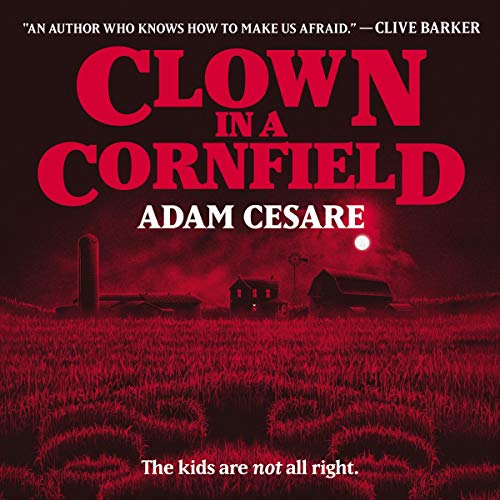
‘Clown in a Cornfield’ is my ‘Scream’ of slasher novels

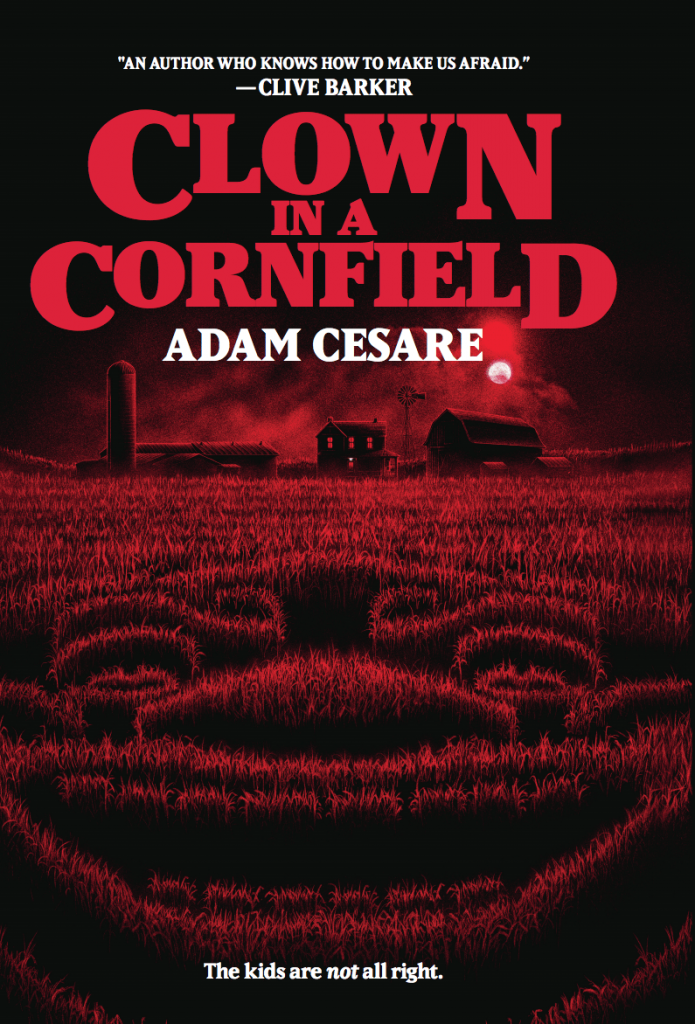
Same as the film genre, there aren’t enough people that appreciate the slasher novel. There’s more to them than just killers with an itch to slice and dice. Some, like Clown in a Cornfield by Adam Cesare for instance, are brutal conquerors in disguise, drawing their readers in through delicate savagery, likable characters, and a narrative that flows with surprising ease. I could wax poetic nonsense about this all day in an attempt to make myself sound prestigious, but I’ll be blunt — it’s amazing and you need to just fu**ing read it.
You know how people say “the meat just fell off the bone” when talking about good ribs, well the Clown in a Cornfield is a rack of excellent cooked ribs. The story slides right off the page and comes to life. (I say this as a compliment even though I hate when meat slides off the bone. I like it tough but that’s just me).
Probably best known for the novel Video Night, this is Cesare’s first dive into YA fiction and the result is an incredibly fast-paced, bloody slasher that gets right to the action with minimal loitering. It’s labeled a YA novel only because the characters are all high school age but other than that there’s really nothing YA about it.
Here’s the official synopsis…
“Quinn Maybrook and her father have moved to tiny, boring Kettle Springs, to find a fresh start. But what they don’t know is that ever since the Baypen Corn Syrup Factory shut down, Kettle Springs has cracked in half. On one side are the adults, who are desperate to make Kettle Springs great again, and on the other are the kids, who want to have fun, make prank videos, and get out as quick as they can. Kettle Springs is caught in a battle between old and new, tradition and progress. It’s a fight that looks like it will destroy the town. Until Frendo, the Baypen mascot, a creepy clown in a pork-pie hat, goes homicidal and decides that the only way for Kettle Springs to grow back is to cull the rotten crop of kids who live there now.”
Killer clowns, ya’ll and these clowns aren’t from outer space or Bill Skarsgard drooling over human veal. These are real killer clowns, old school creepy costumes and butcher knives.
I kind of wished that this came out in 2017 so that it could’ve cashed in on the killer clown craze IT restarted, but where Pennywise was all thriller and almost no killer, these clowns aren’t for dillydallying. It gets right to the chase almost too quickly, but by the climax, it balances itself out fairly well with most of the story taking place over a single night.
The novel starts with a tragic incident taking place in Kettle Springs, Missouri. A tragedy that will haunt the town and drag it into darkness. About a year later, new girl Quinn Maybrook, comes to town and almost immediately make friends with the local troublemakers. There’s the glossy Queen Bee Janet (who I loved to death), Ronnie and her boyfriend Matt, and troubled rich boy Cole who almost everyone has a vendetta against.
Tensions are high in the town of Kettle Springs. There’s a war going on between adults and teenagers as each generation blames the other for the town’s problems. This book reminds me of Scream for a number of reasons, mostly because it’s clever and though hyperbolized, stays grounded in reality. The characters are likable, the romances are established pre-book and unfold properly within the narrative, and the killer, or killers, are very real. They are real people with vendettas, burning with hatred that they feel the need to direct somewhere. It’s easy to tell when Clown in a Cornfield is set and when it was written for the author uses it as a commentary on the current state of the world; social media, politics, and social prejudges. It’s a good touch even if it goes a tad overboard at times.
Also, there is an LGBTQ relationship in the story that’s no treated as some shocking spectacle but is instead normalized, which I really appreciated.

It’s not exactly the deepest thing you’ll ever read but something that will stay with you a lot longer than you expect.
Clown in a Cornfield is currently being adapted for a feature film, most likely on some streaming service because theaters are just cruel fantasies now, so read up before Amazon or Netflix spits it out.
 (5 / 5)
Remember if you want to buy the books just click below and if you do, we get some $ from Amazon.





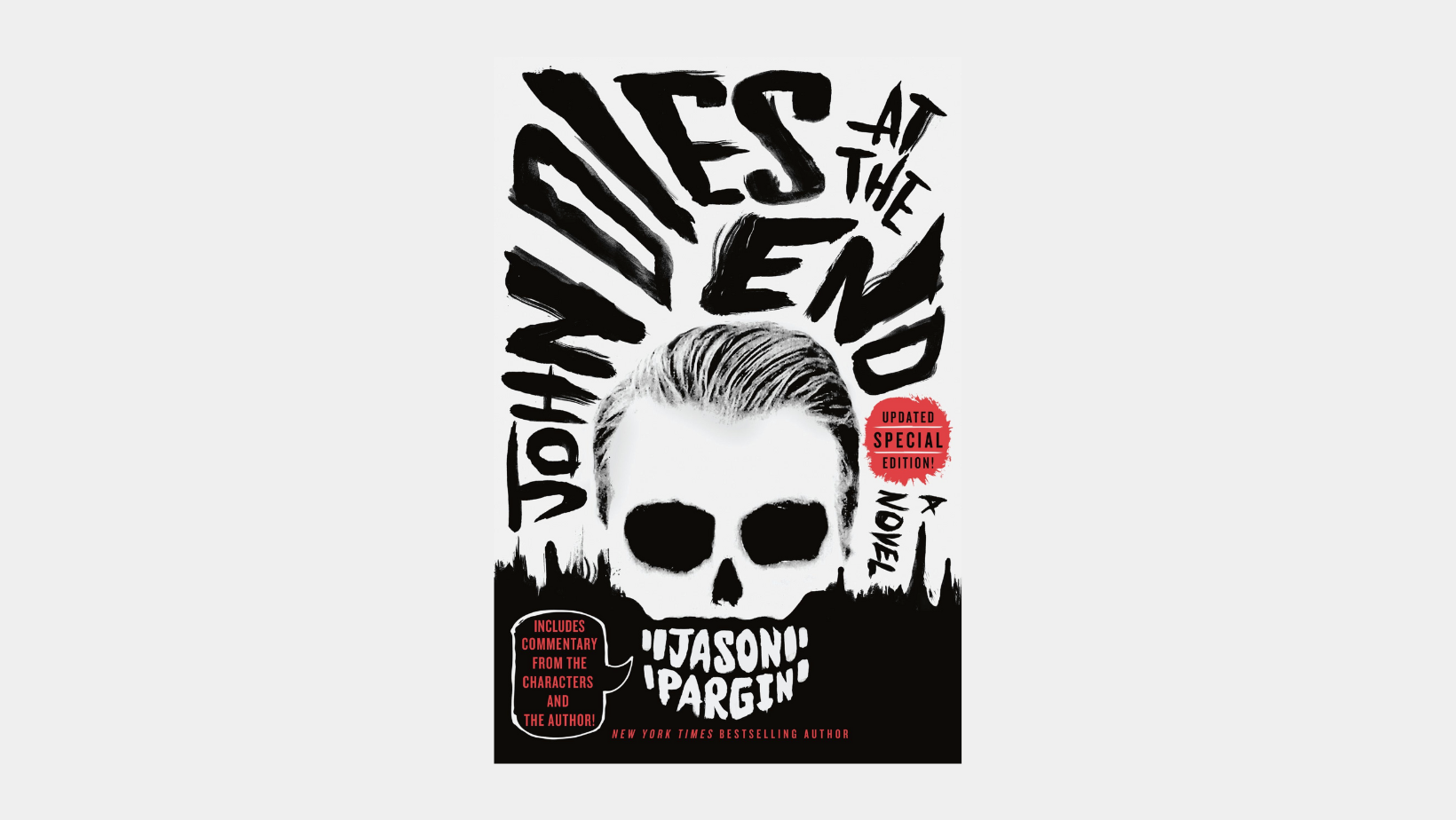
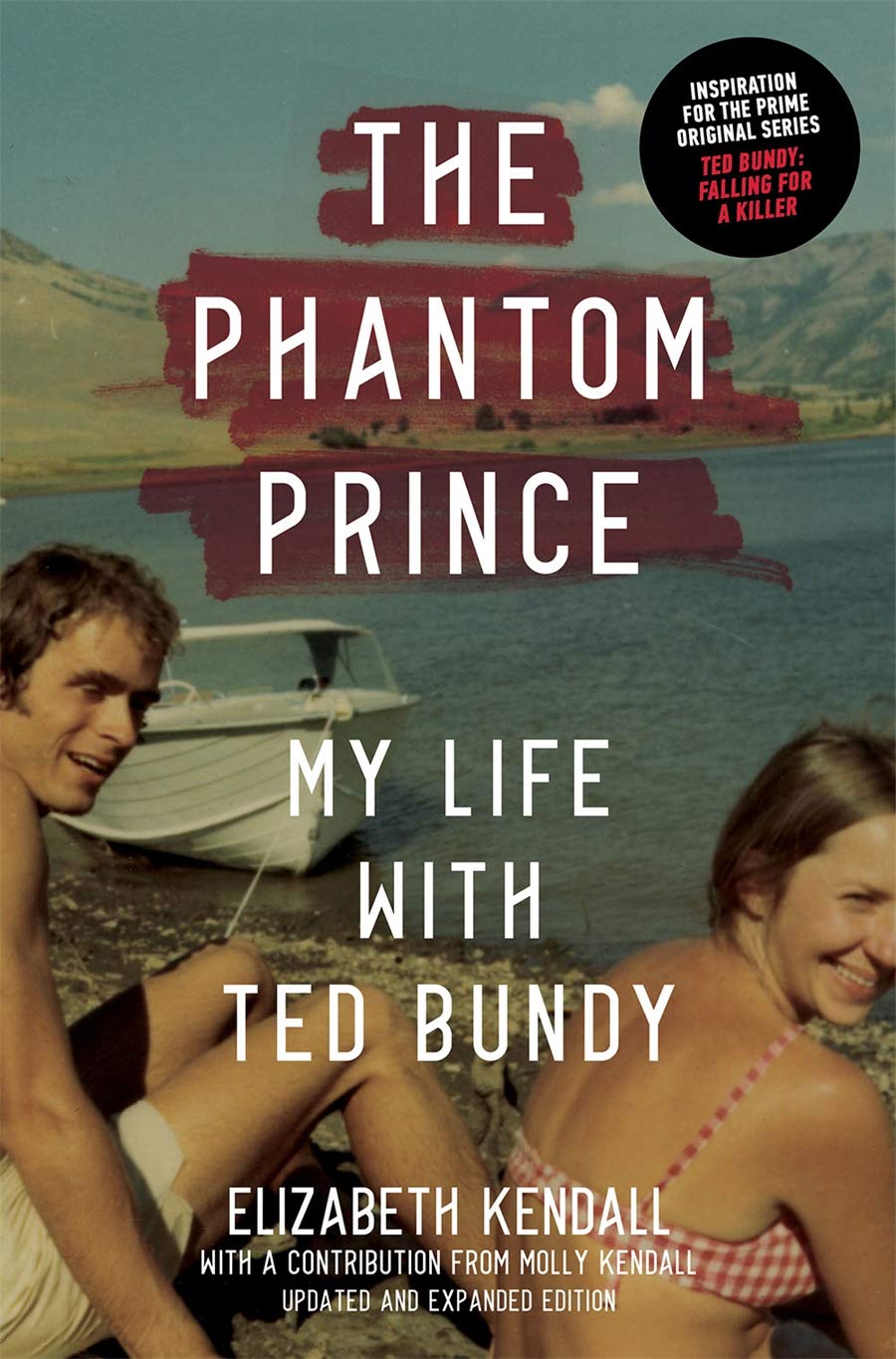
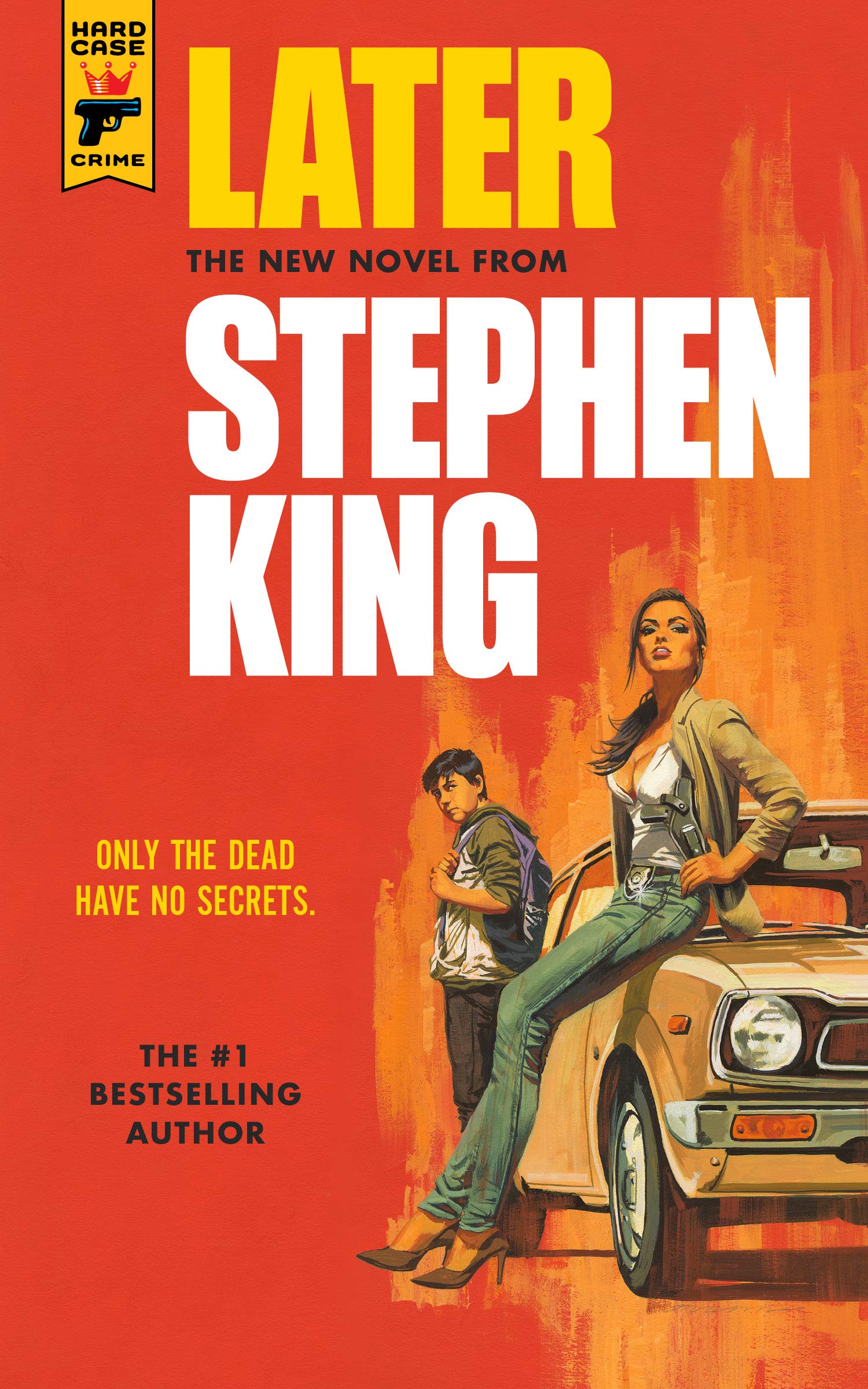

Released in May of this year, You Like It Darker is the latest short story collection by Stephen King.
In the afterward King says. “You like it darker? Fine, so do I.” This sort of declaration might lead one to believe that this collection is going to be darker than his others. That we might reach depths of horror that we haven’t yet seen before, even from the King himself. This is a promise that this book does not deliver on. But that isn’t to say that You Like It Darker wasn’t still a damn fine read.
The good stories
The first story in the book, Two Talented Bastids, started everything out on the right foot. This is the story of a man named Mark. Mark looks after his father, who he lovingly calls Pop. Pop is a famous author His best friend, Butch, was a famous painter before he passed.
Everyone wants to know how two men who are lifelong friends suddenly become famous in their forties. But as far as the men in question are concerned, they’re just two talented bastids. That is, until Pop dies, and leaves a story to explain to Mark how one fateful hunting trip changed their whole lives.
Another tale I appreciated was Rattlesnakes. This is a sequel to the classic King novel, Cujo. If you haven’t read Cujo, this will spoil the ending for you. I, for instance, had not read Cujo.
Rattlesnakes is about Vic Trenton. A recent widower, he’s traveled to Florida to heal from his losses. There, he meets a lovely woman about his age (old) who appears to be not quite right in the head. She walks around around town like Delta Dawn, not with a suitcase in her hand but wheeling a twin stroller. Years ago, her twin sons were killed by rattlesnakes. And she’s never really gotten over that. So she wheels around the stroller and pretends they’re still in there. At least, everyone assumes she’s pretending.
Easily my favorite story in the book was Danny Coughlin’s Bad Dream. Imagine if you had a prophetic dream, but just one. That’s exactly what happens to Danny. He dreams of the location of a murder victim. When he goes to the location, which he’s never been to before, he finds the poor woman in question. Of course, the police find this extremely suspicious. And one detective grows so suspicious that he starts taking matters into his own hands.
The bad stories
Of course, not all the stories can be great. One that I especially disliked was Finn. This is the story of a young man with bad luck. I mean, terminally bad luck. So bad that he’s kidnapped in a case of mistaken identity.
This story just didn’t have a satisfying ending. Nor did it have a satisfying middle. There was just no real conclusion.
Another story that missed the mark was On Slide Inn Road. It’s the story of a family on a car trip to see a dying sister when they’re overtaken by some rough people outside of an old abandoned inn. This story also doesn’t seem to have any sort of cohesive storyline. It’s just the story of a family having a really bad day. It doesn’t go anywhere.
Overall, this was a collection that shows King’s patterns. He writes over and over about men who have lost their wives and their sons. Men who have survived their families and been left alone. Most of the main characters in these stories fall into that category. Perhaps in that way, these stories are darker than the ones King has written in the past. At least for him.
Fans of King’s work will love this book. I loved this book. I loved catching up with the lonely widower from Cujo. I loved meeting monsters who might or might not have crawled out of the back of a Buick. And while none of these stories were dark enough to disturb my sleep, they were good enough to keep me up reading late.
 (4.5 / 5)

As summer approaches, there’s nothing quite like reading a book with warm campy vibes. It’s especially true if you’re lying on a sunny beach. Nicole M Wolverton’s A Misfortune of Lake Monsters matches that picture perfectly. It’s described as a creature feature with a Stranger Things-esque friend group.
Although set in modern times, I found the story felt like something out of the 80s (in a good way). Character dynamics reminded me of The Goonies and IT while the narrative combined just the right amount of adventure, romance, and horror to bring out nostalgia and comfort at the same time. Anyway, let’s dive (hehe) in!
Plot
Lemon Ziegler has one aspiration in life – to become a vet. Unfortunately, that would involve leaving her hometown, which is a problem as she is obligated to continue the family business. While such a situation is not out of the ordinary, the business itself definitely is. Lemon must impersonate Old Lucy, the town monster (a nice homage to the Loch Ness myth).
The decades-old legend about this creature swimming around in the lake is keeping tourism in the town alive. Because of this, poor Lemon has no other choice but to follow in her family’s footsteps. She keeps this secret from everyone, including her best friends, Derrin and Troy. The latter is harbouring feelings for Lemon that are stronger than friendship. As he is a teenage boy though, he is too afraid to make a move (much to Darrin’s enjoyment).
Things take an unexpected turn when a real monster shows up, hungry for blood. As one could guess in these kinds of stories, no one believes Lemon at first. This only allows the creature to claim more victims (and yes, I feel the saddest about the poor dog). Once the adults finally decide to do something, it alerts the FBI, which makes the situation more difficult for our gang. Unsurprisingly, they are the only ones who can stop the monster from wreaking move havoc.
In the midst of the riveting adventure, we also see Lemon go through a character arc. She stands up to her grandfather, allowing him to see her as an adult for the first time ever. There’s also the blossoming of her and Troy’s romance. The pair awkwardly navigate the transition from friendship to romance in an adorable way. At its heart though, this novel is about family, blood or otherwise, and how strong connections can sometimes be the only way to save your life. After all, who could defeat a multidimensional monster by themselves?
Overall thoughts
I had a blast with A Misfortune of Lake Monsters as it combined all the components of making an effective adventure story with enough heart to make you care about what happened to the characters. They are sympathetic yet entertaining and their relationships feel organic down to the dialogue that, while a tad cheesy, is oozing with charisma.
The reasons I am giving it four stars are more individualistic. I tend to go for a darker type of thriller/horror and this story, although not short of gore, ultimately steers in a more heartwarming direction. It’s something I anticipated knowing the age range and found fitting with what the narrative was going for.
I also would have liked a slightly different as I feel the story entered more of a sci-fi subgenre in the last third. While that’s fine overall, it is not my first choice of horror. Considering these things are more down to my personal preferences as a reader, I would absolutely recommend this book. I’m excited to see what the authors does next!
 (4 / 5)
Dear readers, the time has come for some answers. At least, that’s what the teaser for the new installment of Monastery says. As usual, it delivers what it promised and more as we untangle the past and its connection to the present. Without any further ado, let’s talk about it, shall we?
Plot
We start the episode with a blast from the past. Cassandra and Celeste (Nicole’s aunt and Arthur’s lover for those with short-term memory) are in the hospital because of Celeste’s pregnancy complications. Cassandra promises her former best friend that she will ruin her all the while we find out Francis’s real parentage. The picture is finally starting to come together.
As we are back in the present day, our group is more scattered than ever. Thomas is his father Walt’s prisoner while David is still running around looking for Rocky. Fred on the other hand is just looking for any place to crash, homelessness and all. Our dethroned beauty queen Nicole is hiding away from everything – including her shame. Last but not least, little Henry is spending his time taking care of Nana Beth. Guessing that is his redemption for trashing all the evidence of Albert’s murder gathered so far. Although frustrating, his actions are understandable – the poor kid is traumatized and just wants some peace.
George Turner’s murder is still an active investigation. It is obvious that this cover-up wasn’t nearly as successful as Albert’s. I sure as hell hope that Francis gets his comeuppance sooner rather than later. Not particularly because Turner didn’t deserve it but so the rest of the characters would be safe from him. Although as I’ve said before, his clear descent into sociopathic tendencies is kind of fascinating to watch.
We also get an interesting development in what so far has been a tiny background detail, which is the Monastery Werewolf. As the creature comes to visit Rocky, we find out our resident star dog considers it family. Not going to lie, it took me a few reads to understand what this means. Now I’m getting all sorts of ideas as to how the supernatural ties into the rest of the story.
Speaking of the supernatural, it is none other than Madame Witch who frees Thomas from his captivity. Well, her contribution is indirect as she sends his best friend Alfie to help instead. Although I’d say currently the two should set their dynamic status to ‘it’s complicated’. As soon as he’s free, Thomas is immediately back in his detective mode. For arguably the first time he gets some real answers as we find out the whole backstory of Albert/Celeste/Cassandra triangle. I won’t go into details as that trio deserve their own article but let’s just say it gives Cassandra a big ass motive for killing her husband. Not to mention the way she took Francis from Celeste was quite brutal to read.
We reach the lead-on for the grand finale as David and Henry are coming to free Rocky. This naturally comes with a condition – they must hand Francis the key they found during the investigation. Little do they know Nicole is already there being held at gunpoint. Oh, and Fred should also be around somewhere as he was sleeping there the night before. Thomas might be a little late to the party since he and Alfie are held a knifepoint by Rick (seems like a running theme here). Nothing good can come from this.
Overall thoughts
This episode does a perfect job of setting up the big finale. It reveals everything we need to know except the main question – who killed Albert? At this point, while it of course still matters, this story is so much more than that. It’s about all the mess that this family has got themselves into, how with each mistake they kept digging deeper, and how it took a whole new generation for all of that to come up to the surface. I can only hope our investigative gang will make it out alive…
(5 / 5)
More thoughts from the author:
1. Although a minor character in comparison, Walt strikes me as someone who’s there to represent the themes of Monastery – someone who will do horrible things in the name of family. What was your intention with his characterisation, especially considering he works for justice (aka the police?)
This is why I will always defend my decision to have a large cast, as opposed to most books – when you get even the slightest sense of fleshing out a minor character, it feels so rewarding. Walt, to me, takes the crown of “father of the year”, even if he does it by locking his son up in the bedroom. He is protecting his wife’s secret, protecting his son’s innocence, and doing so by going against his core ideals – i.e., a detective covering up a murder. He’s also based on a favourite uncle of mine, so it makes me happy to give him his moment to shine.
2. Something I thought of while writing this review – the cover up of George Turner’s murder seems to be a kind of juxtaposition as to how neatly Albert’s was since the police keep discovering evidence left and right (and how Francis doesn’t particularly seem to care). Was this intentional on your part?
It all adds up to plot convenience, and I have no shame in admitting that – Albert’s murder was so neatly covered up because I needed it to go unsolved for 14 years, whereas the reader knows who killed George, so there is no need for the cover-up to be well done.
As for Francis’ reaction to the murder, he started out anxious and paranoid after the fact, but he has grown into a state of not caring, which further depicts his descent into darkness – he knows he’s close to his goal (of finding the money and leaving his family), so there is a sense of invincibility taking over. He is stepping into his main villain energy and we are here for it!
3. Alfie has been yet another background character until now and yet he is the one who rescues Thomas. To me he seems like the friend who genuinely cares for Thomas and who gives him that reality check he sometimes needs to get out of his own head. Was that at least partially why you chose to bring him in for the grand finale?
Fun fact: Alfie was originally a series regular. However, halfway through writing the series, I realised I wasn’t using him as much as I’d wanted to, so I bumped him down to recurring. But the original plan always saw him and the other regulars coming together for the big climax, which is why he is in the fold. Alfie is someone who keeps Thomas grounded (if not humbled), since Thomas has the slight tendency to, well, think he’s better than everyone else. What’s coming up for them is one of the most exciting things I’ve ever written about.
4. Lastly, it’s not so much a question but rather a well done for how you crafted the Albert-Celeste-Cassandra dynamic! I was very invested despite knowing the outcome. Weirdly enough, while hating Cassandra for how she handled it, I sort of understood why she thought that Celeste deserved it? Either way, congrats for managing to craft these love stories in the midst of all the murdery goodness.
Thank you so much. As I’ve said before, romance is not my strong suit, but I do love a soapy triangle – and if it ends with gun violence, even better! The reveal of this mystery is probably my favourite sequence in the series so far.

